Electric Vehicle Battery Fire Research
Tools
Excel, Technical Literature Review, Trend Analysis
Year
2026
Format
Professional Research Project
Research Overview
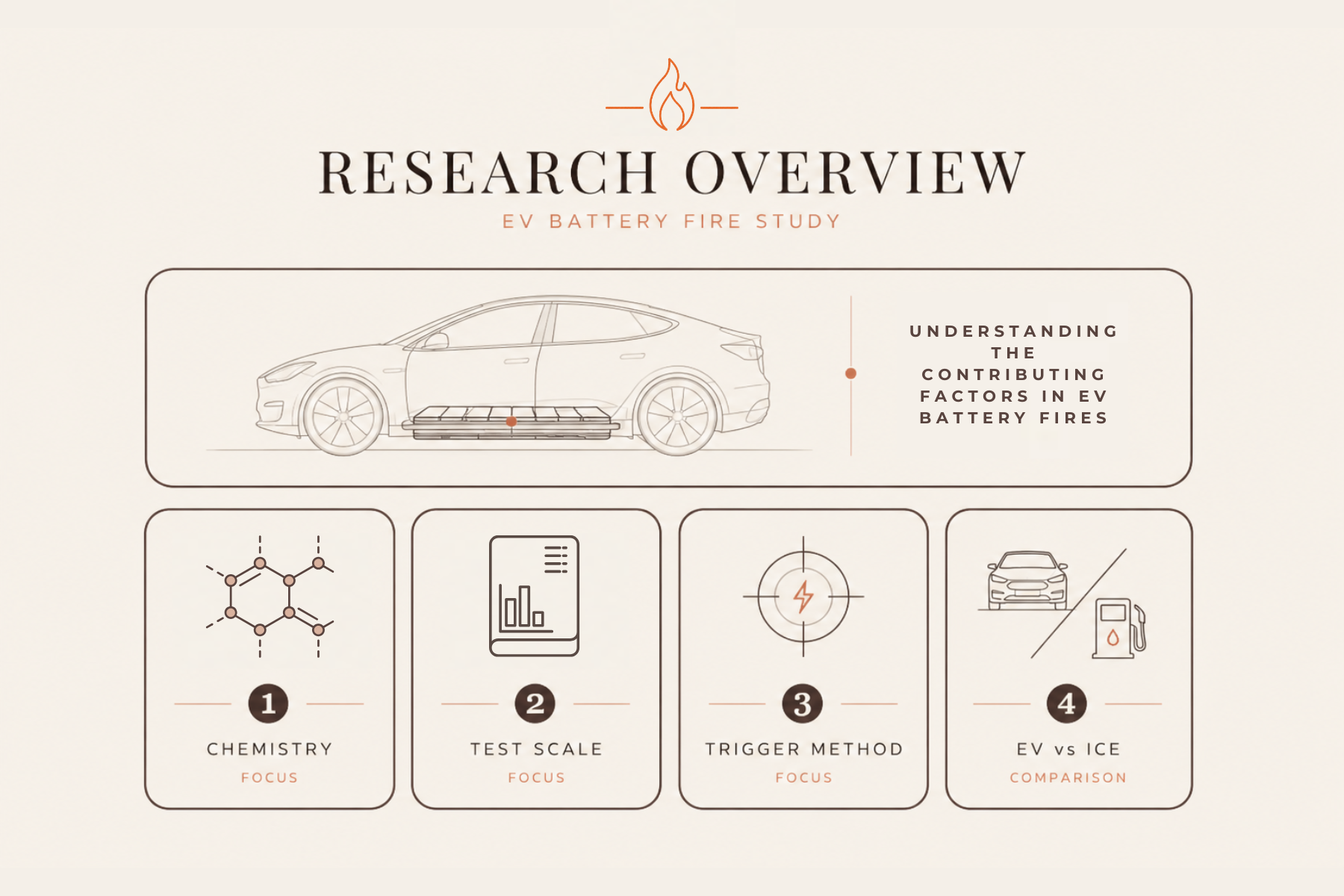
An overview of the project focus: understanding the contributing factors in EV battery fires through chemistry, test scale, trigger method, and EV versus ICE comparisons.
1 / 6
Project Goal
Source, organize, and analyze published lithium-ion battery fire studies to identify trends in hydrogen fluoride emissions across battery chemistries, test scales, and trigger methods, supporting broader EV fire safety research.
My Contribution
- Reviewed and organized findings from 25+ published EV battery fire studies into a structured Excel-based research database
- Extracted key variables including battery scale, chemistry, trigger method, HF emissions, units, and relevant graph data
- Compared emissions trends across cell, module, pack, and full-vehicle fire tests to support technical interpretation
- Synthesized recurring patterns in hydrogen fluoride release, battery involvement timing, and EV versus ICE fire behaviour
- Prepared summarized findings and visuals to make complex fire-emissions data easier to review and compare
Key Features
Structured Research Database
Over 25 published studies were translated into an Excel database, with fields for source details, battery chemistry, test scale, trigger method, reported HF values, graph data, and technical notes.
Visual Research Graphics
Key findings were converted into clean visual graphics to make complex fire-emissions data easier to review, compare, and communicate.
Technical Interpretation
The final synthesis described why reported HF values varied between studies, including the influence of test setup, battery involvement, combustion conditions, and measurement context.